





Colon cancer, also known as colorectal cancer (CRC), is an increasing health concern for people under age 50.
According to recent data, approximately 153,020 new cases are diagnosed in the United States annually, making it the third most common cancer, and it claims about 52,550 lives each year. While overall incidence has declined in older adults, rates are rising sharply among younger people. In 2023, nearly 20% of cases occurred in those under 55, up from 11% in 1995, with a 1-2% annual increase since the mid-1990s.
Alarmingly, CRC is projected to become the leading cause of cancer death in adults aged 20-49 by 2030.

Theories for this rise in early-onset CRC (under age 50) point to a mix of lifestyle and environmental factors. Key lifestyle contributors include sedentary lifestyles, heavy alcohol use, and diets high in processed foods and sugars, and low in dietary fiber. Environmental factors include antibiotics, microplastics, food additives (like artificial sweeteners and emulsifiers) and synthetic food dyes.
These environmental and dietary factors can disrupt the gut bacteria or microbiota and lead to gut dysbiosis. Gut dysbiosis is a disruption in healthy gut microbial balance, promoting CRC through inflammation, impaired barrier function, and altered nutrient processing and mucosal integrity.
Healthy microbiota produces short-chain fatty acids (SCFAs) like butyrate for anti-inflammatory effects. High-fiber, polyphenol-rich diets foster beneficial bacteria like Bifidobacterium and Lactobacillus, which suppress procarcinogenic species and lower inflammation. Pro-carcinogenic bacteria like Fusobacterium nucleatum can lead to chronic low-grade inflammation and DNA damage. Chronic inflammation and DNA damage can then result in cancer formation.

Screening is crucial for early detection, when cure rates exceed 90%. The gold standard is colonoscopy, recommended starting at age 45 for average-risk adults, which visualizes the colon and can remove precancerous polyps. Non-invasive options include Cologuard, a stool-based DNA test detecting altered DNA and blood, with 93.9% sensitivity for detecting colon cancer. Cologuard testing should be done annually while colonoscopy can be done every 3 to 10 years depending on risk and initial findings.
Emerging cell-free DNA (cfDNA) blood tests, are an option for those wishing to avoid colonoscopy or stool sampling. These tests currently offer 83.1% sensitivity for colon cancer detection and should also be done annually.
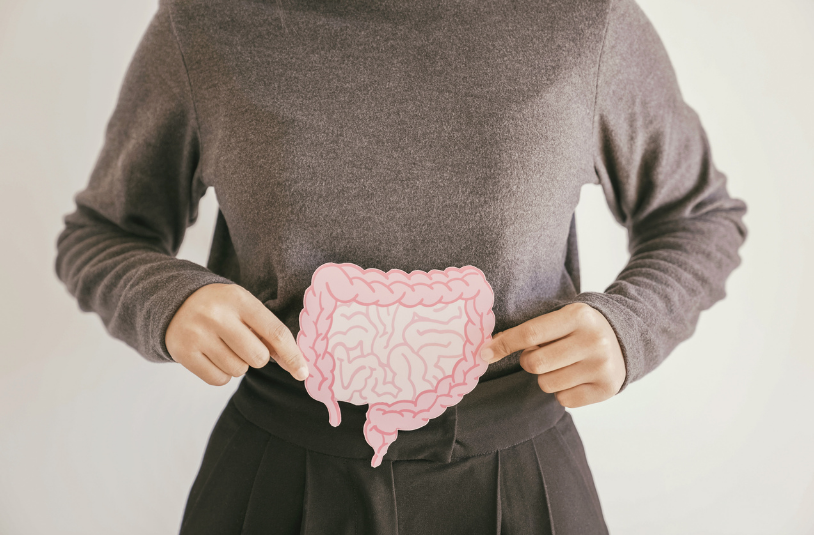
While early detection of colorectal cancer is vital, the functional medicine approach focuses on prevention.
Comprehensive testing can evaluate the health of your microbiota as well as exposure to certain harmful dietary and environmental factors. If you are interested in testing, please speak with your functional health provider.
Stay tuned for our next newsletter which offers recommendations on how to reduce your risk of developing colorectal cancer.
References
- Siegel RL, Wagle NS, et al. Colorectal cancer statistics, 2023. CA Cancer J Clin. 2023. doi:10.3322/caac.21772
- Stoffel EM, Murphy CC. Epidemiology and mechanisms of young-onset colorectal cancer. Gastroenterology. 2020;158(2):341-353. doi:10.1053/j.gastro.2019.07.055
- Giannakis M, Ng K. A common cancer at an uncommon age. Science. 2023;379(6633):eade7114. doi:10.1126/science.ade7114
- Imperiale TF, Porter K, et al. Next-generation multitarget stool DNA test for colorectal cancer screening. N Engl J Med. 2024. doi:10.1056/NEJMoa2310336
- Chung DC, Gray DM, et al. A cell-free DNA blood-based test for colorectal cancer screening. N Engl J Med. 2024. doi:10.1056/NEJMoa2304714
- Botteri E, Peveri G, et al. Lifestyle changes and colorectal cancer risk. Am J Gastroenterol. 2022;117(4):558-567. doi:10.14309/ajg.0000000000002065
- Collado MC, Castillo MJ, et al. Diet as a modulator of the tumor microenvironment in colorectal cancer. Int J Mol Sci. 2023;24(8):7317. doi:10.3390/ijms24087317
- Adigun A, Adebile TM, et al. Causes and prevention of early-onset colorectal cancer. Cureus. 2023;15(6):e45095. doi:10.7759/cureus.45095

 Learn More

