
menu 919-999-0831

The UV Report: A Guide to Safer Fun in the Sun

If you have teenage girls in your house, chances are you’ve heard some version of:

“The UV is already a 7.”

“It’s supposed to hit a 10 by noon.”

“I can’t go to the pool right now—the UV is too high.”

Somewhere along the way, Gen Z became amateur meteorologists. For the rest of us, here’s a simple guide to understanding the UV Index—and using it to make smarter summer sun decisions.

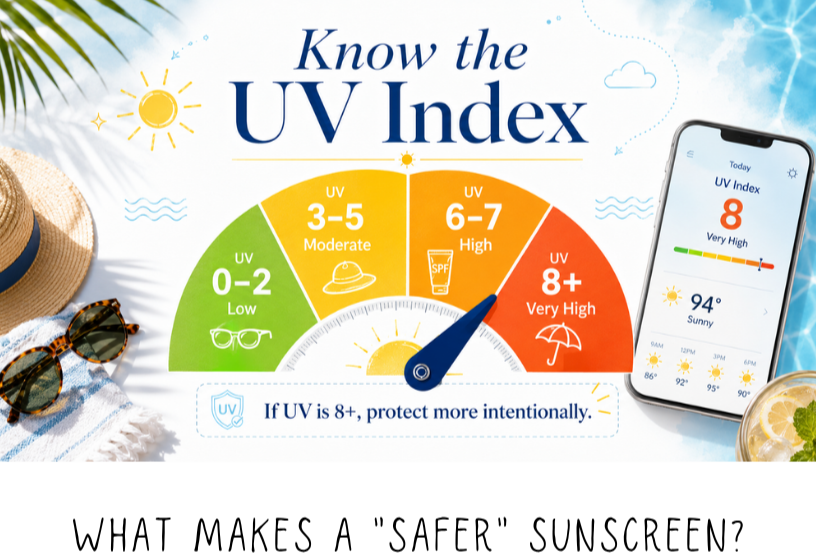
The UV Index measures intensity of the sun’s ultraviolet radiation. You can find the UV Index in most weather apps alongside the temperature and chance of rain.

☀️ UV 0-2 (Low): Generally safe for extended outdoor activity.

☀️ UV 3-5 (Moderate): A great range for most intentional sun exposure.

⚠️ UV 6-7 (High): Sunburn risk increases significantly, especially for fair-skinned individuals.

🚫 UV 8+ (Very High to Extreme): Common during North Carolina summer afternoons. This is when much of the skin-aging damage occurs.

A simple rule of thumb: if you’ll be outside for a while and the UV is 8 or higher, be more intentional about protection. Don’t forget that heat, humidity, sweating, and swimming increase your need for fluids and electrolytes before you feel thirsty.
Look for mineral sunscreens that use:

✔️ Zinc Oxide

✔️ Titanium Dioxide

These ingredients sit on the skin’s surface and provide broad-spectrum protection against UVA and UVB rays.

Avoid sunscreens containing these ingredients that have questionable effects on hormones AND the environment:

✖️ Oxybenzone

✖️ Octinoxate

✖️ Octocrylene

✖️ Homosalate

Reliable mineral sunscreen brands include Badger, Thinksport, and Babo Botanicals.

Not a fan of thick white sunscreen? Newer mineral lotions and lightweight fluid formulations are dramatically easier to apply than even a few years ago.
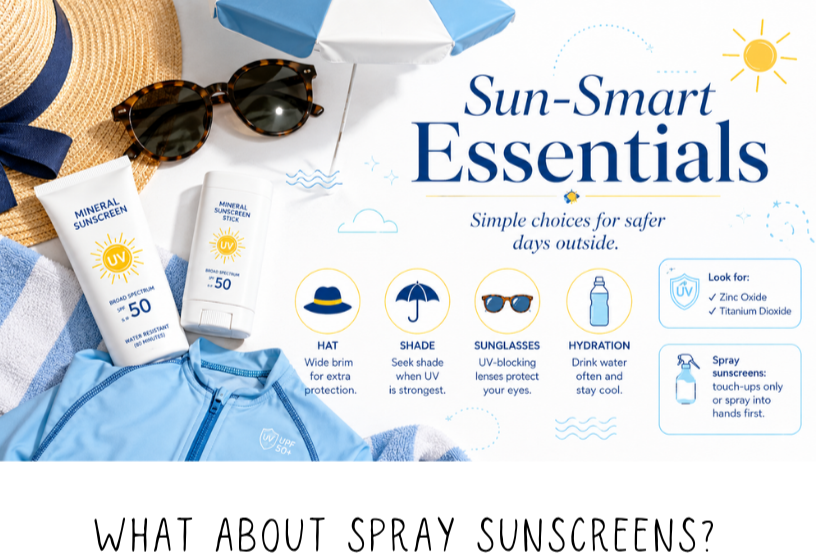
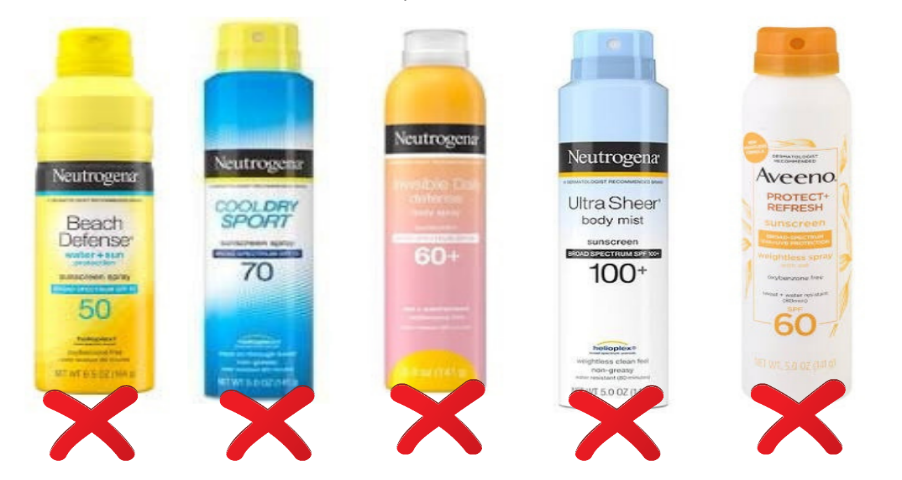
Sprays are convenient, but not ideal as your primary sunscreen. People often apply too little, miss spots, or inhale the product. One strategy is to apply mineral lotion or fluid before leaving the house and reserve sprays for quick touch-ups at the pool or beach.

If you use a spray:

  • Avoid spraying directly onto the face – or over the faces of those nearby.
  • Spray into your hands first.
  • Rub it in for complete coverage.

Don’t Forget the Best Sun Protection

Hint: It might not be sunscreen.

  • Rash guards and UV swim shirts
  • An umbrella or shade at the beach or pool
  • Wide-brimmed hats
  • Sunglasses with UVA/UVB protection

The Bottom Line

Respect the sun—it is powerful. But don’t fear it. Sunlight supports mood, sleep, circadian rhythm, and vitamin D production. The goal isn’t to avoid the sun; it’s to be strategic about it.

This summer, don’t just check for afternoon thunderstorms—check the UV. You may even earn a few cool points with your favorite Zoomer.

Schedule an appointment with your Carolina Total Wellness provider for personalized guidance on vitamin D, skin health, hormones, hydration, or other lifestyle factors that influence your long-term wellness.


July’s Vitality Shield: Simple Ways to Protect your Skin and Energy

July brings longer days and outdoor fun, but it also asks more of your body’s natural defenses. Think of your skin like a battery that powers cell renewal. Strong summer sun can drain it faster through oxidative stress, the same process that speeds up visible aging and raises skin cancer risk over time.

UV rays also nudge telomeres—the protective caps on your DNA—to shorten more quickly, which can push cells toward early senescence, or “retirement,” before their time. This quietly chips away at health span, the years you stay active and vibrant.

Fireworks and other July celebrations add another layer. Sudden injuries from sparks or falls can limit movement, which in turn affects mitochondrial health and energy production inside your cells. Heat and dehydration further stress your mitochondria, making recovery slower if you already carry genetic tendencies toward inflammation.

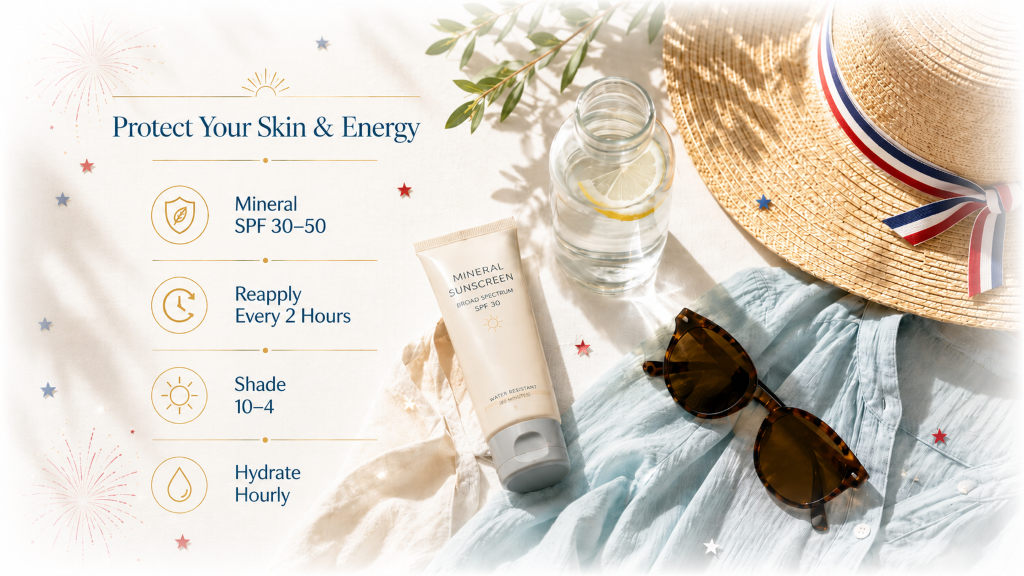
The Good News? Small, steady choices protect both today and tomorrow. Apply broad-spectrum mineral sunscreen of SPF 30–50 daily, reapplying every two hours when outdoors—think of it as giving your skin’s battery a steady charge. Wear light, long sleeves and a wide hat during peak sun hours (10 a.m.–4 p.m.) to lower cumulative damage. For July 4 events, keep a safe distance from fireworks, stay hydrated with water every hour, and rest in shade if you feel overheated.

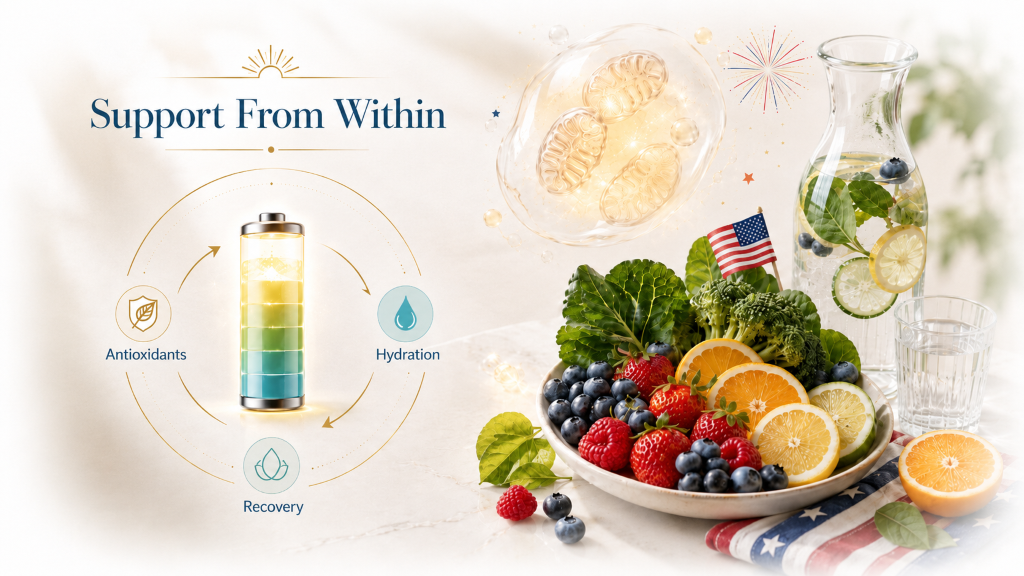
Support your body from within by eating colorful produce rich in antioxidants; these help your cells manage oxidative stress and encourage healthy autophagy, your built-in cleanup system. If you know your skin type or family history, schedule a yearly skin check—early detection keeps small issues from becoming bigger ones.

Personalize further by noticing how your body responds. Fairer skin or certain genetic markers may call for extra layers of protection and more frequent monitoring. These steps are low-risk, with mineral sunscreen generally safe for daily use when chosen for your skin. Track how you feel after a week or two and adjust timing or habits accordingly. By caring for your skin and energy now, you’re investing in more active, comfortable years ahead.

Everyone’s needs differ, so the best plan fits your unique story. Consider seeing one of our Physicans at Carolina Total Wellness to review your personal risks, discuss targeted options, and create a plan that supports your optimal health for years to come.

How To Choose A Safer Sunscreen

Caroline Wilson, M.Ed., FMHC


Summer is coming and while sunlight is vital for health AND is an important way for us to obtain Vitamin D, it is important to practice safe sun exposure and prevent sunburn, which is a risk factor for skin cancer. A recent study in JAMA found that chemical ingredients from sunscreen were detected in the bloodstream after one use, sometimes for days after. These ingredients are also detected in breast milk, and have been associated with lower testosterone levels in teenage boys.
Recently Johnson and Johnson voluntarily recalled 5 of their sunscreens due to the presence of benzene, a carcinogen in these products. 
Using a safer sunscreen without known harmful chemicals is important.  EWG, the Environmental Working Group, is a non-profit, non-partisan organization dedicated to protecting human health and the environment. They score products based on safety data. EWG scores 0-10, 0 is the cleanest and 10 is the worst. Here is a list of ingredients to avoid with the EWG ratings:

  • Oxybenzone(EWG 8), sometimes called benzophenone-3, is banned in Hawaii due to its harm on aquatic life, and yet still found in around 40% of non-mineral based sunscreen. In animal studies, it is an endocrine disruptor and there is some evidence it has a similar impact in humans too – In an evaluation of CDC-collected exposure data for American children, researchers found that adolescent boys with higher oxybenzone measurements had significantly lower total testosterone levels. It is also a contact allergen, may cause systemic toxicity, and be harmful to aquatic life.
  • Octinoxate(EWG 6) – (aka OMC or methoxy-cinnamate) linked to endocrine disruption as well as reproductive toxicity in animal studies. Harms coral reef.
  • Homosalate(EWG 4) – linked to reproductive and developmental toxicity. 
  • ParabensPhthalates – endocrine disruptors, can hide under the guise of ‘fragrance’, so avoid the word Fragrance on that ingredient list. 

Lowest Risk Ingredients: Zinc Oxide (EWG 2), Titanium Dioxide (EWG 2), Avobenzone(EWG 2).

Some recommended brands that use the better ingredients are Babo Botanicals, Earth Mama, 365 Clear spray, Think Sport, Blue Lizard and Badger. For a complete list of safer sunscreens you can go to www.ewg.org.

For more information on using safer products for your skin, contact our office and schedule an appointment with one of our Health Coaches.   

Your Partner in Health!
Caroline Wilson, M.Ed., FMHC

Functional Medicine

Functional medicine is a science-based health care approach to assess, prevent and treat complex chronic disease.

Answers to frequently asked questions provided by Carolina Total WellnessLearn More

Allergy Testing & Drops

After a brief allergy test, you can begin sublingual immunotherapy (SLIT), or allergy drops under the tongue. No more allergy shots!

learn more about Allergy testing and drops provided by [VAR_PRACTICE_NAME]Learn More

About Your Visit

Learn how to prepare for your visit and what to expect at your initial consultation and at your follow-up visits with our office.

What to expect at your appointment with Carolina Total WellnessLearn More

facebook icon twitter icon instagram icon