





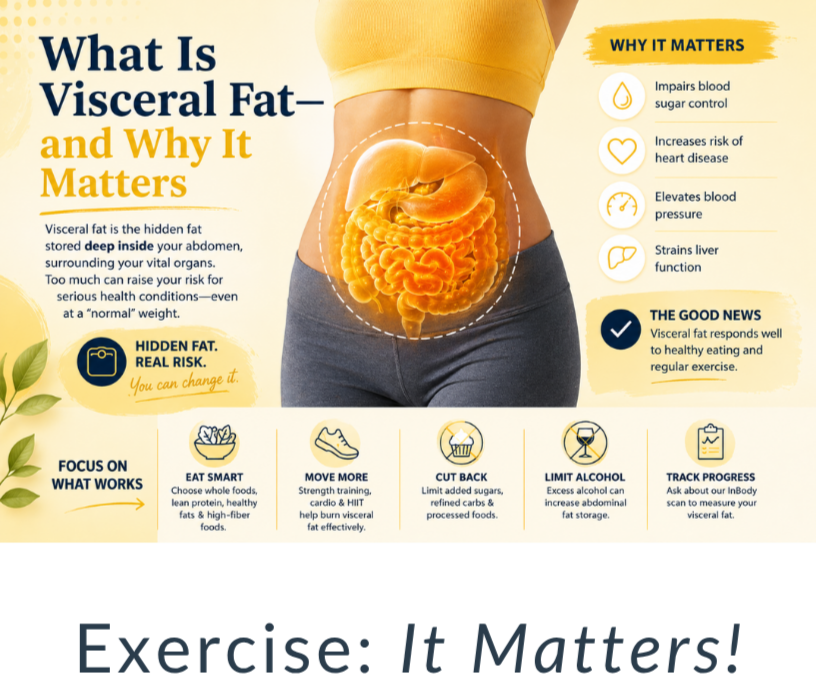
Not all body fat is created equal. Visceral fat is the type stored deep inside your abdomen, surrounding vital organs like your liver, pancreas, and intestines. Unlike subcutaneous fat (the kind you can pinch), visceral fat is metabolically active—and that’s where the concern lies.
High levels of visceral fat are strongly linked to insulin resistance, inflammation, and an increased risk of chronic conditions like Type 2 diabetes, heart disease, and metabolic syndrome. Even people at a “normal” weight can carry excess visceral fat, which is why it’s often called hidden fat.

Visceral fat releases inflammatory compounds and hormones that disrupt your body’s normal balance. Over time, this can:
- Impair blood sugar control
- Increase LDL (“bad”) cholesterol
- Elevate blood pressure
- Strain liver function
The good news? Visceral fat is highly responsive to diet and lifestyle changes—often more so than other fat stores.
Foods That Help Reduce Visceral Fat
Focusing on whole, nutrient-dense foods can actively support fat loss and metabolic health:
- Lean proteins: chicken, fish, eggs, Greek yogurt
- Healthy fats: avocados, olive oil, nuts, seeds
- High-fiber foods: vegetables, berries, chia seeds, legumes
- Whole grains: quinoa, oats, rice
- Green tea & polyphenol-rich foods: help support fat metabolism
Protein and fiber are especially powerful—they keep you full, stabilize blood sugar, and reduce cravings.
Foods That Increase Visceral Fat
Regularly consuming the following can promote fat storage around your organs:
- Refined carbohydrates: white bread, pastries, sugary cereals
- Added sugars: soda, candy, desserts (especially those high in fructose)
- Ultra-processed foods: chips, fast food, packaged snacks
- Trans fats: found in some fried and processed foods
- Excess alcohol: particularly in large or frequent amounts
These foods spike blood sugar and insulin, encouraging fat storage—especially in the abdominal area.
Diet is key—but movement matters just as much. Visceral fat is particularly responsive to exercise, even before you see changes on the scale.
The most effective approaches include:
- Strength training: builds muscle, which improves insulin sensitivity and increases metabolic rate
- Cardio: especially brisk walking, cycling, or swimming, helps burn stored fat
- HIIT (high-intensity interval training): short bursts of intense effort followed by rest can be especially effective
Even moderate, consistent activity (like 30 minutes of walking most days) can significantly lower visceral fat over time.
The Takeaway
You can’t always see visceral fat—but you can influence it daily. Exercising, prioritizing whole foods, balancing blood sugar, and limiting processed sugars and refined carbs can significantly reduce your risk and improve long-term health.
Small, consistent changes = powerful results.
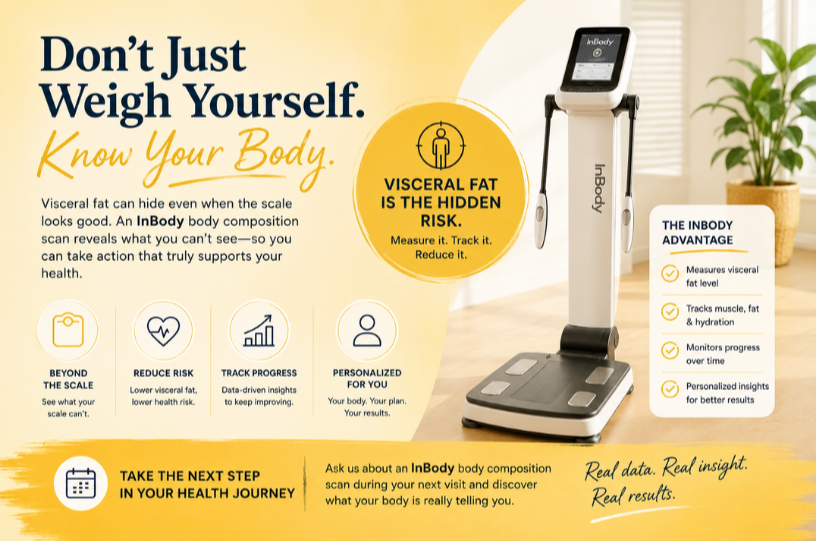
If you’d like to measure your visceral fat and track your progress over time, ask to use our InBody body composition scale during your next visit.







 Learn More

