





Heart disease is still a leading cause of death, but recent studies are changing how risk is identified and treated. The theme is increasingly personal: the same cholesterol number does not necessarily mean the same plan for everyone.

A CT calcium score measures hardened plaque in the heart arteries. A score of zero is one of the strongest signs that a near-term heart attack is unlikely, and it may help some people safely delay a statin or daily aspirin. A high score can justify starting these medicines.¹ ²
For stable symptoms, major guidelines now often favor imaging before an invasive angiogram, which carries small risks of heart attack, stroke, or death.³
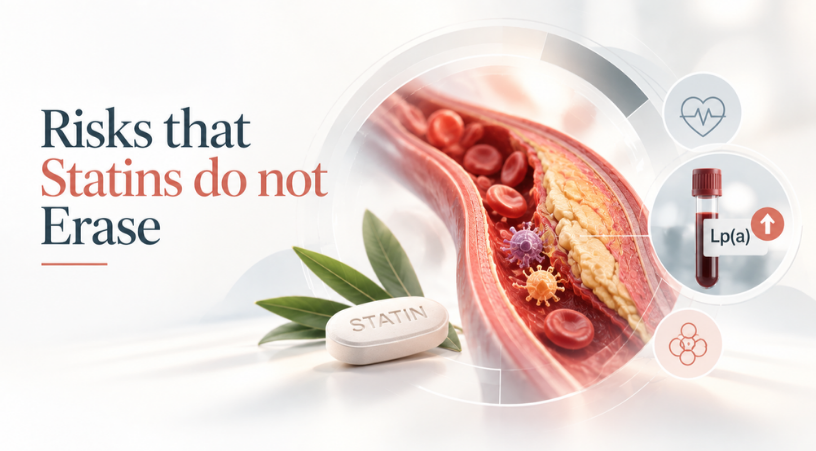
Some people still experience heart events even after LDL (“bad”) cholesterol is well controlled. Two factors receiving increasing attention are blood vessel inflammation and lipoprotein(a), or Lp(a), a mostly inherited particle.
Levels above about 50 mg/dL (125 nmol/L) are associated with a higher risk of heart attack, stroke, and narrowing of the aortic valve. Ordinary statins have little effect on Lp(a). Gene-silencing medications are being studied but are not yet part of routine care.⁴ ⁵
Low-dose colchicine, a medication long used for gout, reduced repeat major heart events by about 25% in combined trials and was recently authorized in the United States for cardiovascular prevention. It has not been shown to help people live longer, however, and questions remain about deaths from causes other than heart disease. It is therefore not appropriate as a blanket add-on for everyone.⁶

In the SELECT trial, weekly semaglutide was studied in adults with overweight or obesity and existing heart disease—but without diabetes.
Over roughly three years, semaglutide reduced the combined risk of cardiovascular death, heart attack, or stroke by 20%. Gastrointestinal side effects led about 1 in 6 participants to stop taking the medication.⁷

Structured Mediterranean and low-fat eating programs reduced deaths and nonfatal heart attacks in people already at higher cardiovascular risk.⁸
Clinicians also continue to consider sleep, nicotine exposure, blood pressure, blood sugar, weight, physical activity, cholesterol, and diet together—an approach reflected in the American Heart Association’s Life’s Essential 8.⁹

Ask your Physician whether a coronary calcium score, an Lp(a) blood test, or a review of inflammation may be appropriate for your individual situation.
Do not start colchicine, aspirin, a statin, or a weight-loss injection on your own. These findings are intended to help guide shared decision-making with a healthcare professional; they are not a one-size-fits-all prescription.
References
- Nasir C, Cainzos-Achirica M. Role of coronary artery calcium score in the primary prevention of cardiovascular disease. 2021.
- Hussain M, et al. Coronary Artery Calcium Scoring in Asymptomatic Patients. 2023.
- Ahmed, Carver, et al. Cardiovascular imaging techniques for the assessment of coronary artery disease. 2022.
- Fusco M, Maggioni, et al. Lipoprotein(a), Inflammation, and Atherosclerosis. 2023.
- Kamstrup. Lipoprotein(a) and Cardiovascular Disease. 2020.
- Tucker, Goonetilleke, et al. Colchicine in atherosclerotic cardiovascular disease. 2024.
- Lincoff, Brown-Frandsen, et al. Semaglutide and Cardiovascular Outcomes in Obesity without Diabetes. 2023.
- Karam, Agarwal, et al. Comparison of seven popular structured dietary programmes and risk of mortality and major cardiovascular events in patients at increased cardiovascular risk: systematic review and network meta-analysis. 2023.
- Rikhi, Shapiro. Assessment of Atherosclerotic Cardiovascular Disease Risk in Primary Prevention. 2022.
- Bottardi, Prado, et al. Clinical Updates in Coronary Artery Disease: A Comprehensive Review. 2024.

 Learn More

