




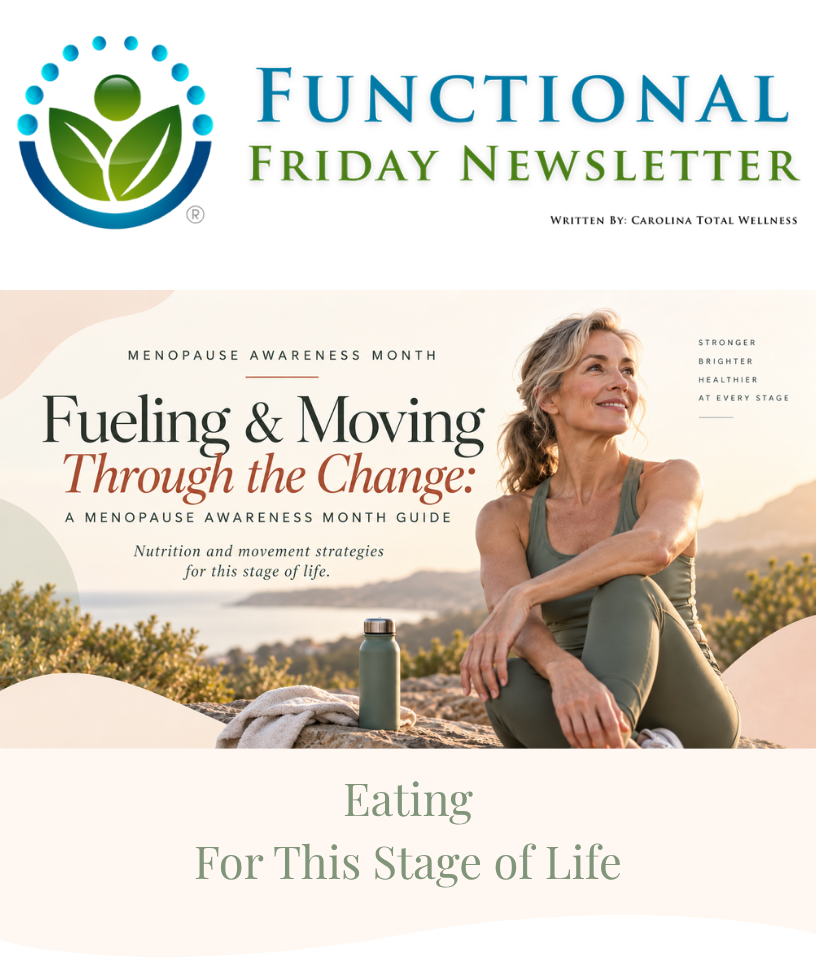
Plants first, variety over volume. Aim for 30+ different plant foods a week — vegetables, fruits, legumes, nuts, seeds, whole grains, herbs, and spices all count. Rotate colors instead of the same “safe” salad daily. Fermented foods (kimchi, sauerkraut, tempeh) support gut health, tied to hormone metabolism.
Rethinking protein. Skip the 180–200g targets aimed at bodybuilders. Simple formula: body weight in pounds ÷ 2 = a reasonable daily minimum in grams (roughly 75–100g for a 150 lb woman). Regular strength training? Lean toward the higher end. Spread it across meals — plant proteins (lentils, beans, tofu, edamame) count too, and bring fiber and phytoestrogens along.
KEY NUTRIENTS + SOURCES:
- Calcium: dairy or fortified plant milk, leafy greens, tofu, canned salmon/sardines with bones, almonds
- Vitamin D: fatty fish, egg yolks, fortified foods, sun exposure — many benefit from a supplement (ask your doctor)
- Omega-3s: fatty fish, walnuts, chia and flax seeds
Fiber: beans, lentils, oats, berries, artichokes, whole grains
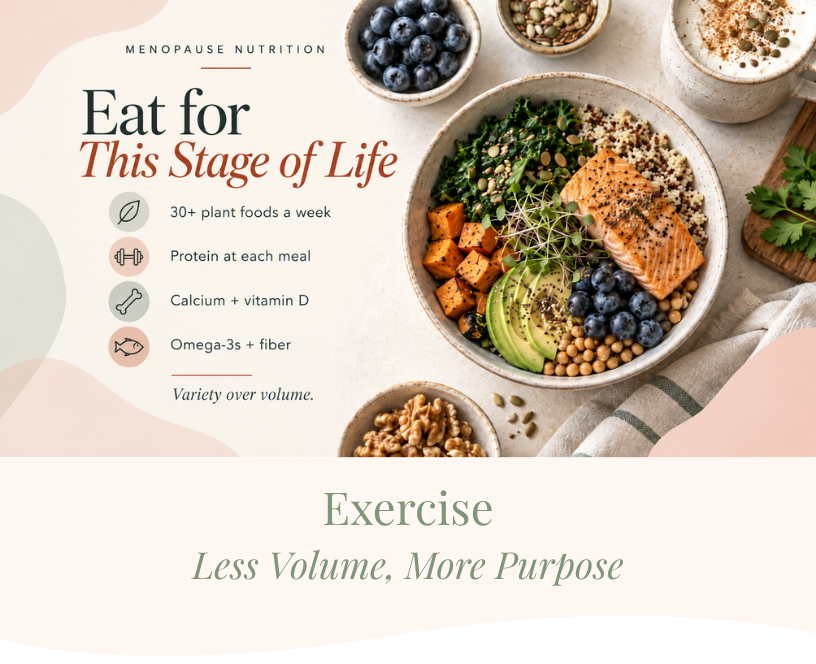
Women-specific research points to: heavy strength work, short strategic intensity, and less moderate “in-between” cardio.
Strength, 2–3x/week. Go heavy when you can — struggling to finish 3 reps by your 5th set is a good benchmark — but consistency matters more than the number. Options: free weights (squats, deadlifts, rows, presses), bodyweight (push-ups, step-ups, glute bridges), resistance bands, strength classes (BODYPUMP, barre, functional fitness), or Pilates. Two full-body sessions a week, 20–30 minutes each, is enough. Heavy lifting won’t “bulk you up” — that takes far more volume and food than this.
Add bone-specific jump training. Three 10-minute sessions a week of low-amplitude jumps (jumping jacks, small box jumps, jump squats) — one of the most effective moves for bone density.
Long, easy-paced sessions as your main training can blunt strength gains. Keep intervals short and infrequent — 1–2x/week, ~30 minutes: sprint intervals (30 sec hard/90 sec easy × 6–8), hill sprints, or hard bike/rower work where you can’t talk. Save easy walks and swims for recovery days.
Fuel how your body prefers. A pre-workout protein + carb snack (Greek yogurt with fruit, a shake with a banana) helps some feel steadier. Others — especially the 5am class crowd — feel strongest fasted; the science isn’t settled. Trust what works.
Don’t skip: balance/mobility work (single-leg stands, yoga, tai chi) and real rest days — recovery matters more now.
Ready to put this into practice?
Schedule an appointment with your health coach for personalized guidance on eating and exercising through this transition.




 Learn More

